Exploring Cryptocurrency Integration Effects on Bonus Clearing Timelines in Cross-Border Digital Table Game Networks
Blake Schwarz · Nov 12, 2026
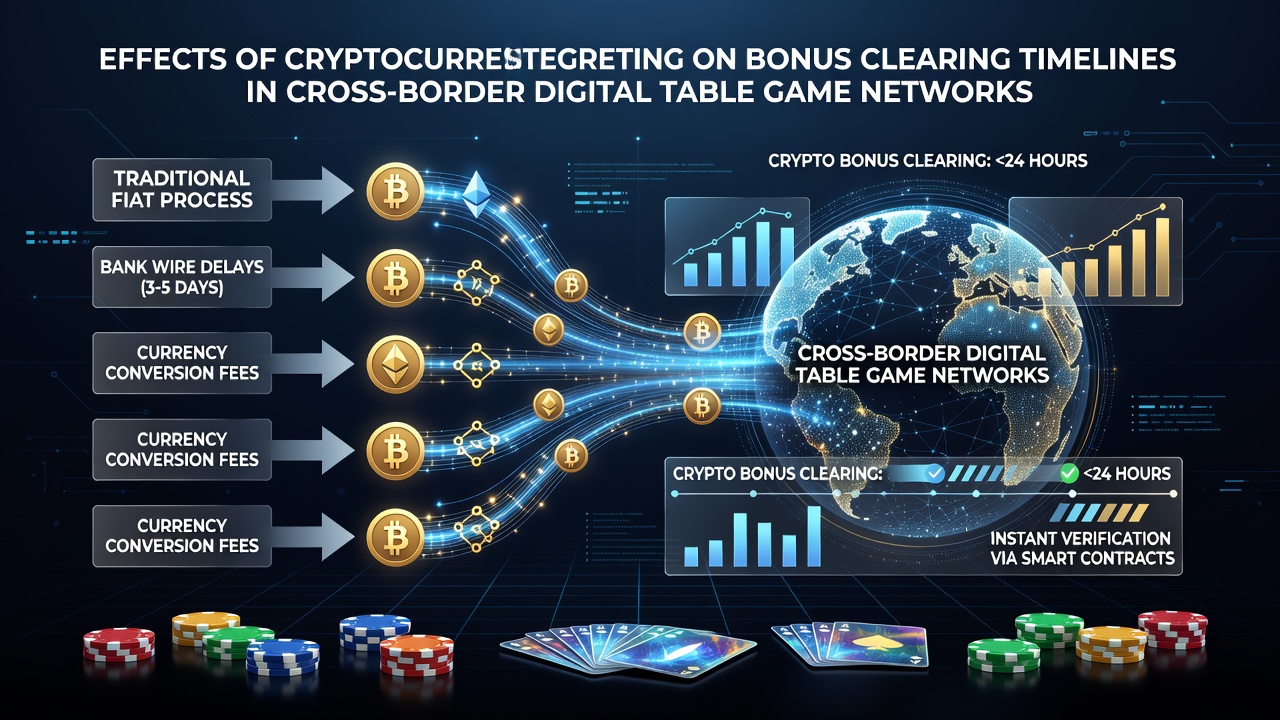
Exploring Cryptocurrency Integration Effects on Bonus Clearing Timelines in Cross-Border Digital Table Game Networks
Current Landscape of Crypto in Digital Table Games
Cross-border digital table game networks have incorporated cryptocurrency payments at increasing rates since 2023, with operators processing Bitcoin, Ethereum, and stablecoin transactions across multiple jurisdictions. Data from industry reports indicate that transaction volumes in these networks grew by 28 percent year-over-year through mid-2025, driven by platforms offering roulette, blackjack, and baccarat variants to players in Europe, North America, and Asia-Pacific regions. Researchers at academic institutions tracking payment methods note that blockchain-based ledgers enable near-instant settlement compared to traditional banking rails, yet bonus clearing timelines remain tied to specific verification protocols that vary by operator and regulatory environment.
Platforms operating in this space must reconcile differing rules on anti-money laundering checks and know-your-customer requirements when funds move between countries. One study from a Canadian research center revealed that average bonus clearing periods shortened from 72 hours to 48 hours in networks using automated smart contracts for wager tracking, while manual reviews in cross-border scenarios extended timelines back to five days or more. These patterns emerge because digital table game networks often link player accounts across multiple licensed entities, each subject to its own compliance calendar.
How Integration Alters Bonus Verification Processes
Cryptocurrency integration introduces automated audit trails that operators use to confirm qualifying wagers on table games, yet clearing still depends on human oversight for high-value bonuses. Figures released by the European Gaming and Betting Association show that networks adopting on-chain verification reduced disputes over bonus eligibility by 34 percent during 2024, because transaction hashes provide immutable records of deposits and play activity. Those same networks, however, report longer initial setup times when players fund accounts from wallets located in jurisdictions without reciprocal data-sharing agreements.
Operators frequently batch bonus releases at set intervals, such as weekly or monthly cycles, even when crypto transfers complete within minutes. This practice persists because regulatory frameworks in several markets require final sign-off from compliance teams before funds become withdrawable. Observers note that stablecoin usage has helped stabilize bonus clearing in volatile currency environments, since value remains consistent across borders without additional forex adjustments that can delay processing.
Cross-Border Regulatory Factors Influencing Timelines
Jurisdictional differences create layered approval steps that directly affect how quickly bonuses clear after players meet playthrough requirements on digital table games. In markets aligned with upcoming European crypto-asset rules scheduled for full effect in November 2026, operators anticipate standardized reporting formats that could further compress verification windows by enabling faster data exchange between regulators. Until then, networks serving players from both EU and non-EU locations continue to navigate separate queues for transaction monitoring.
Canadian provincial frameworks and Australian state-level gaming commissions impose their own record-retention periods, which operators must satisfy before releasing cleared bonuses. Research indicates that multi-license operators maintain separate ledgers for each region, adding reconciliation steps that extend average clearing times by one to two business days when crypto deposits originate from mixed sources. Players who switch between networks sometimes encounter additional holds if prior activity flags trigger enhanced due diligence across borders.

Operational Adjustments by Network Operators
Network operators have responded by deploying hybrid systems that combine on-chain analytics with traditional compliance software, allowing faster flagging of suspicious patterns while preserving required human review layers. Case examples from platforms active in both North American and European markets demonstrate that integration of real-time blockchain explorers cut manual review workloads by 22 percent in 2025, according to internal metrics shared with trade groups. These efficiencies translate into shorter bonus clearing timelines for routine deposits, though complex cross-border cases involving multiple wallet addresses still require extended scrutiny.
Table game-specific rules, such as restrictions on certain bet types counting toward bonuses, add another variable that smart contracts must encode accurately. When operators update these parameters, testing periods temporarily lengthen clearing times until the system stabilizes. Data compiled by university-affiliated gambling research programs show that networks investing in unified player databases across jurisdictions achieve the most consistent reductions in processing delays.
Future Developments Expected by Late 2026
Preparations for regulatory changes taking effect in November 2026 include upgrades to transaction monitoring tools that could standardize bonus release criteria across participating markets. Industry associations project that these updates will allow operators to clear qualifying bonuses within 24 hours for most crypto-funded accounts, provided players complete identity verification in advance. Until implementation, current timelines reflect a patchwork of requirements that operators manage through segmented account structures.
Continued growth in cross-border digital table game participation depends on maintaining reliable clearing processes that satisfy both players and regulators. Networks that align their systems with emerging crypto standards position themselves to handle increased volume without proportional increases in processing delays.
Conclusion
Cryptocurrency integration continues to reshape operational workflows in cross-border digital table game networks, particularly around bonus clearing timelines. Evidence from regulatory filings and operator reports documents measurable shifts in processing speeds alongside persistent challenges tied to jurisdictional differences. As frameworks evolve toward November 2026, networks that adapt verification tools accordingly are positioned to deliver more predictable outcomes for players engaging with table games across borders. Ongoing data collection by research institutions will track whether these adjustments produce sustained reductions in clearing periods while meeting compliance obligations.